Kwanzaa Decor DIY: A Meaningful Table on a Budget
Kwanzaa decorations DIY: weave a mkeka, build a simple kinara, set a Karamu table and make zawadi, with sourced meanings and $25 and $50 plans.
Under $50 · Renter-safe · Easy · 3–5 hoursUpdated
In this post
Kwanzaa decorations DIY style are the right fit for this holiday, because making things by hand is part of the point. A woven paper mkeka, a simple wood kinara, a basket of fruit and a few ears of corn make a full, meaningful table for about $25. Add fabric, candle cups and handmade gifts and you're near $50.
Kwanzaa 2026 runs from Saturday, December 26, through Friday, January 1, 2027, with one principle for each of the seven days. The Karamu, the communal feast, is traditionally held on December 31.
Planning several winter holidays at once? Our seasonal decorating calendar lays out what to make and when.
What Kwanzaa Is (and Why Handmade Fits)
Dr. Maulana Karenga created Kwanzaa in 1966, during the Black Freedom Movement. The name comes from the Swahili phrase matunda ya kwanza, "first fruits" (Official Kwanzaa Website).
The official site is clear that Kwanzaa is "not a religious holiday, but a cultural one with an inherent spiritual quality." People of many faiths celebrate it, and it wasn't created to replace anyone's religious holiday (FAQ).
Handmade decor isn't just a budget trick here. One of the seven principles is Kuumba, creativity. A widely shared guide based on Dr. Karenga's model encourages making your own symbols, such as the kinara, as an act of Kuumba (University at Buffalo guide).
The official site asks celebrants to come "with a profound respect for its values, symbols and practices" and not to mix Kwanzaa, its symbols, values and practice with other cultures (The Celebration). In practice, that means keeping the Kwanzaa table its own thing: no tinsel, no Santa, no menorah next to the kinara.
The Seven Principles (Nguzo Saba), Day by Day
Each day of Kwanzaa honors one principle. Here are the names and English meanings from the Official Kwanzaa Website, with 2026–27 dates.
| Day | Date | Principle | Meaning |
|---|---|---|---|
| 1 | Sat, Dec 26 | Umoja | Unity |
| 2 | Sun, Dec 27 | Kujichagulia | Self-Determination |
| 3 | Mon, Dec 28 | Ujima | Collective Work and Responsibility |
| 4 | Tue, Dec 29 | Ujamaa | Cooperative Economics |
| 5 | Wed, Dec 30 | Nia | Purpose |
| 6 | Thu, Dec 31 | Kuumba | Creativity |
| 7 | Fri, Jan 1 | Imani | Faith |
A simple decor idea that teaches the principles: write each Swahili name and its meaning on a cardstock tent card. Set out the day's card next to the kinara each evening.
The Seven Symbols and What They Mean
The Official Kwanzaa Website lists seven basic symbols. Knowing them makes every DIY choice below easier.
- Mkeka (the mat): symbolic of tradition and history, the foundation everything else sits on.
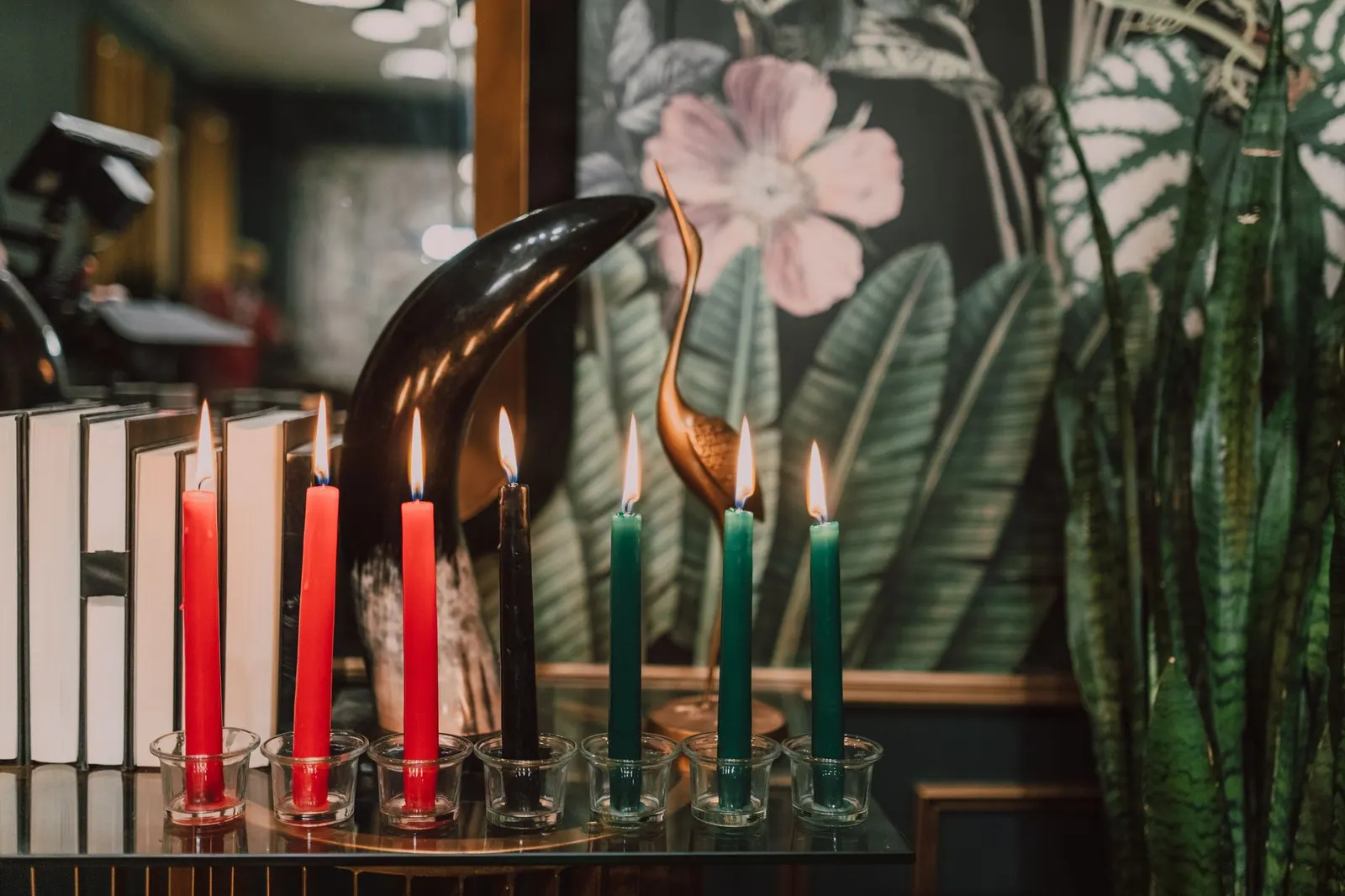
- Kinara (the candle holder): symbolic of roots, the parent people, continental Africans.
- Mishumaa saba (the seven candles): symbolic of the Nguzo Saba, the seven principles.
- Mazao (the crops): symbolic of African harvest celebrations and the rewards of productive, collective labor.
- Muhindi (the corn): symbolic of children and the future they embody.
- Kikombe cha umoja (the unity cup): symbolic of unity, the principle and practice that makes everything else possible.
- Zawadi (the gifts): symbolic of the labor and love of parents and the commitments children make and keep.
The site also describes two supplemental symbols, including the bendera, the flag in black, red and green.
The Colors
The official site gives each color a meaning: black for the people, red for their struggle, and green for the future and hope that come from their struggle. Use those three as your whole palette. Natural textures like straw, wood and woven baskets fill in the rest.
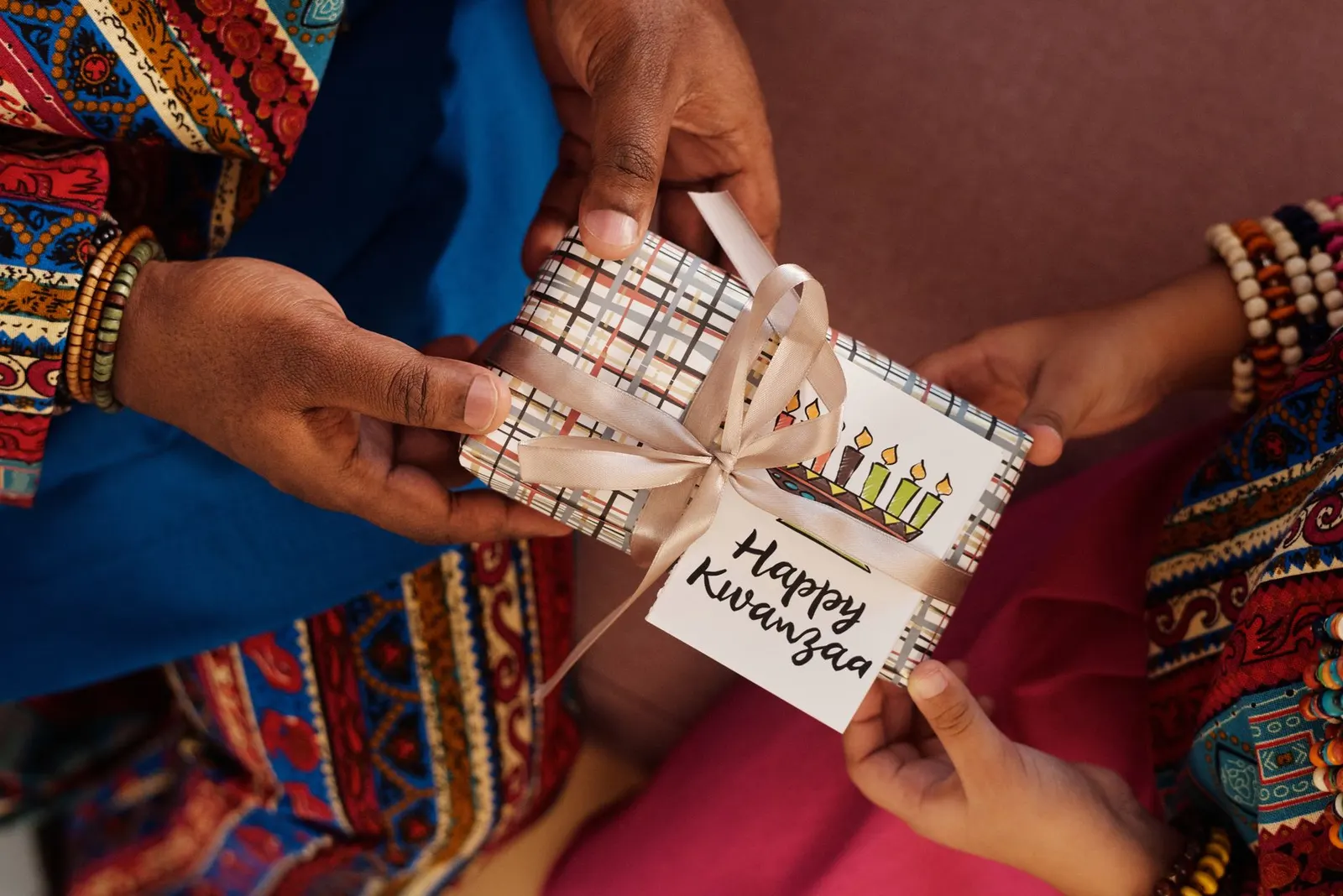
Project 1: A Woven Paper or Fabric Mkeka
The mkeka goes down first, and everything else sits on it. Straw is traditional, but the Buffalo-hosted guide notes that cloth is a fine substitute, preferably an African print.
Your options, from cheapest up:
- Woven paper (about $1.25–$5). Construction paper from Dollar Tree or Walmart. It's a good kids' project and takes about 45 minutes.
- Fabric (about $3–$10). A remnant or thrifted cloth in black, red and green, or a print that means something to your family. Hem it with iron-on tape if you don't sew.
- Woven placemat (about $1.25–$5). A plain straw or seagrass placemat from Dollar Tree or a thrift store is closest to tradition.
Weave a paper mkeka (Kwanzaa mat)
Total time: about 45 min
Materials
- 2 sheets black 12 x 18 in construction paper
- 6–8 sheets red and green construction paper
- Glue stick or clear tape
- Optional: clear self-adhesive laminate
Tools
- Ruler
- Pencil
- Scissors or a paper trimmer
Make the base
Fold one black 12 x 18 in sheet in half the short way. Starting at the fold, cut straight lines about 1 inch apart, stopping 1 inch from the open edge so the base stays in one piece. Unfold it flat.
Cut the weaving strips
Cut red and green sheets into strips about 1 inch wide and 12 inches long. You need roughly 16 strips for one mat. Alternate the colors so the pattern reads red, green, red, green.
Weave over and under
Weave the first strip over one slit and under the next across the whole base. Start the second strip under, then over, so the rows lock. Push each strip snug against the last one.
Secure the edges
When the base is full, glue or tape every strip end to the back of the black border. Trim any overhang flush with the edge so nothing sticks out.
Protect it
For a mat that lasts all seven days, cover it with clear self-adhesive laminate or slip it under a clear plastic placemat. Make one per family member if you want each person to have their own.
Project 2: A Simple Wood Kinara
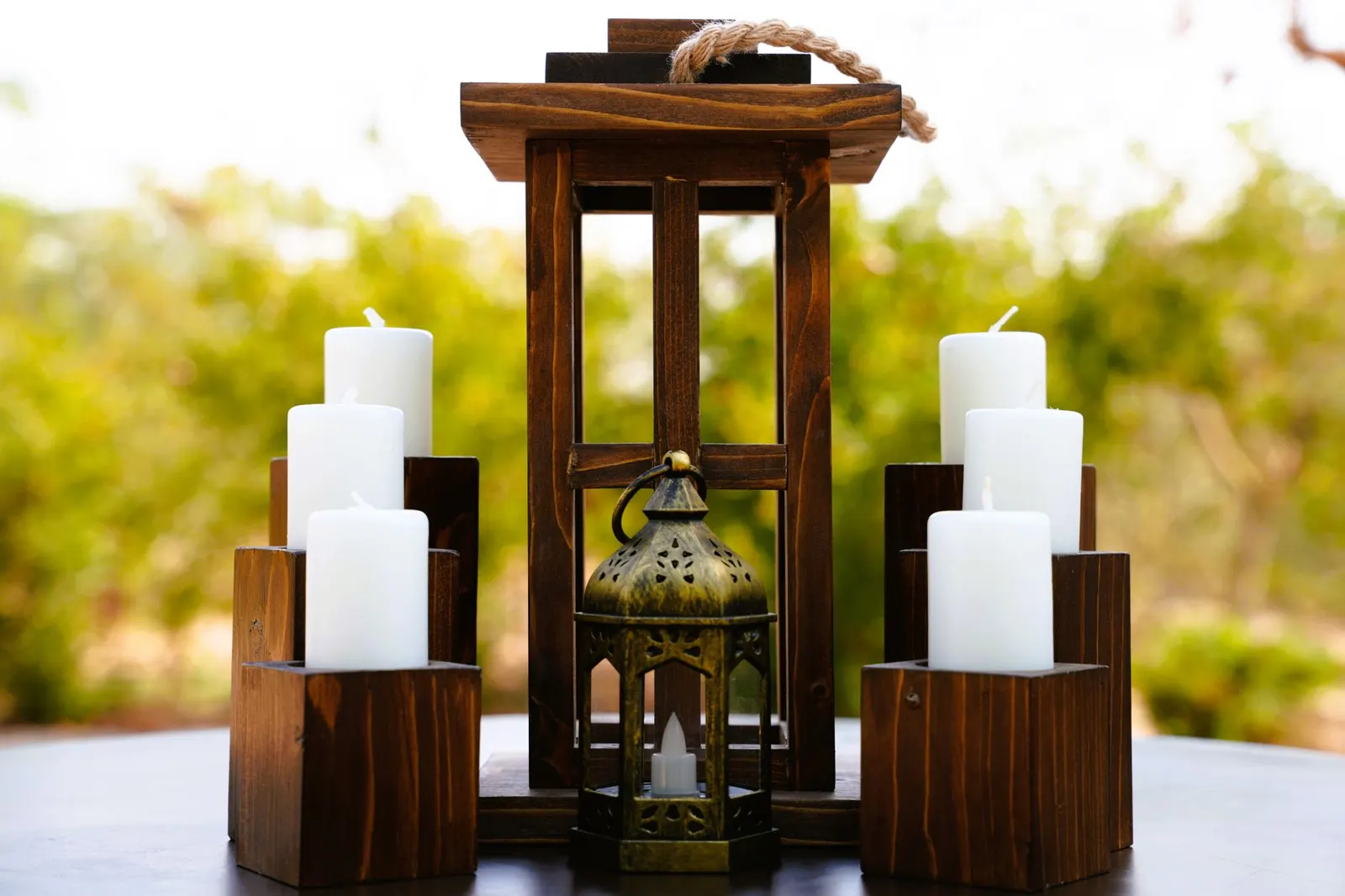
The Buffalo-hosted guide suggests using Kuumba and making your own kinara if you don't have one: "A 2x4 or a piece of driftwood will do just fine." The kinara holds seven candles, one for each principle. Don't confuse it with a menorah, which holds nine.
The basic build (about 1 hour):
- Cut the board. Use a 16–18 inch piece of 2x4 or 1x4. Many hardware stores will make a simple cut if you ask at the lumber desk.
- Sand and finish. Sand the edges. Leave it natural, or rub on stain or a dark coffee wash for depth. Let it dry overnight.
- Mark seven spots. Space them about 2–2.5 inches apart, centered on the board.
- Add holders. The sturdiest choice is metal taper candle cups glued in place with construction adhesive, so the flame never sits directly in bare wood. If you drill holes instead, match the bit to your candle's base and drop a metal cup into each hole.
- Load the candles. Black goes in the center. The three red go to its left and the three green to its right (Official Kwanzaa Website).
No-tools version: line up seven glass votive holders or metal candle cups on a narrow tray. It reads as a kinara and costs about $6–$10.
How the Candles Are Lit
The official site says "the black candle is lit first on the first day of the celebration," and "the remaining candles are lit afterwards from left to right on the following days." It explains the order this way: the people come first, then the struggle, then the hope that comes from the struggle (The Celebration).
You'll also see families who alternate sides, lighting the candle tied to each day's principle. Practice varies between households and communities. If you're joining someone else's celebration, follow their lead.
Candle Safety (and the LED Option)
A paper or straw mkeka, a fruit basket and dried corn all burn. Set the kinara on a ceramic tile or a small metal tray on top of the mat, and keep paper, cards and corn husks 12 inches from the flames.
Renters and dorms: if open flame isn't allowed, use flameless LED tapers. Wrap each base in a band of black, red or green washi tape, or buy colored LED tapers. You can still "light" one per day to follow the ritual, and USFA itself suggests flameless candles as an option.
Project 3: The Mazao Basket
Mazao is fruits and vegetables in a basket or bowl. A plain straw basket or wooden bowl keeps the look simple and lets the produce carry the meaning.
Pick produce that holds up for a week on the table:
- Long-lasting: apples, oranges, sweet potatoes, yams, onions, lemons.
That costs about $4–$8. Pick the freshest, best-looking produce you can find, since the mazao stands for the harvest.
Project 4: The Muhindi (Ear-of-Corn) Display
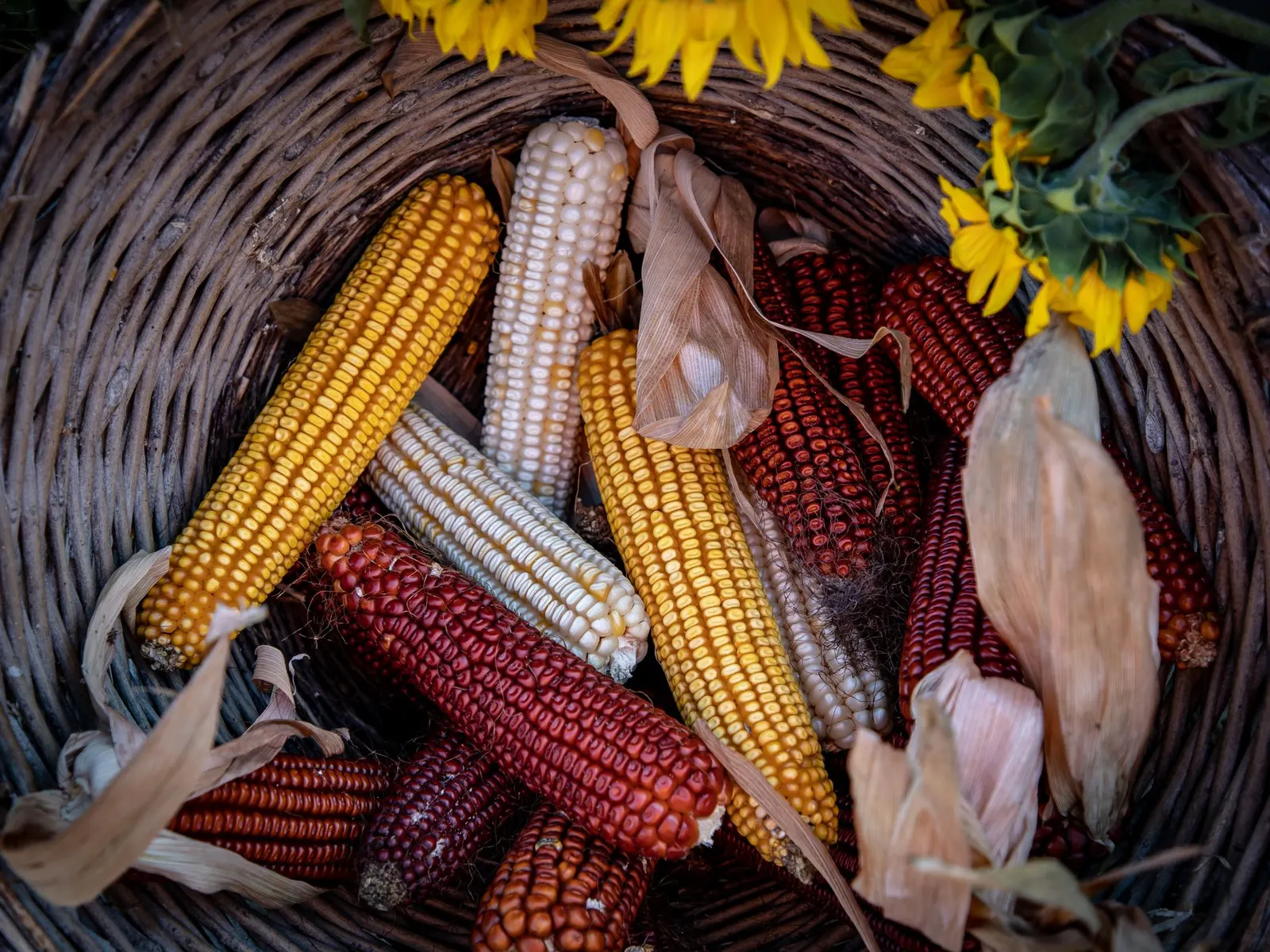
Place one ear of corn for each child in the household on the mkeka (Farmers' Almanac). Households without children still place corn on the mat, often two ears, to represent the children of the community (Hallmark). Customs vary, so follow your family's practice.
Budget options:
- Fresh corn in the husk. Many grocery stores carry it in winter, though supply varies by region. Peel the husks back partway for a sculptural look. Fresh ears last a few days at room temperature, so swap them midweek.
- Dried decorative corn. Sold in fall at grocery stores and farm stands. Buy a few in November and store them somewhere dry. They last for years.
- Handmade corn. Kids can make ears from yellow and tan paper or felt. It counts, and it's free if you have scraps.
Lay the ears in a fan at one end of the mkeka, husks pointing out.
Project 5: The Kikombe cha Umoja (Unity Cup)
You don't need anything special. A thrifted goblet, a wooden cup or a simple ceramic cup, about $1–$4, is enough. Choose one cup the whole family will use, because the cup stands for unity.
Project 6: Handmade Zawadi (Gifts)
Zawadi represent the labor and love of parents and the commitments children make and keep. The Buffalo-hosted guide says gifts "should be affordable and of an educational or artistic nature," and they are usually exchanged between parents and children. Many families give them on January 1; others exchange them at the Karamu on December 31.
Handmade ideas under $5 each:
- A family history booklet. Fold paper into a small book with photos, a family recipe and a note about a relative.
- A principles journal. A plain notebook covered in kraft paper, with one page per principle for reflections.
- Hand-drawn art or a framed poem. A thrifted frame and something your child wrote or drew.
- A book. Used bookstores and library sales often price children's books low. Pick one by a Black author or about African or African American history.
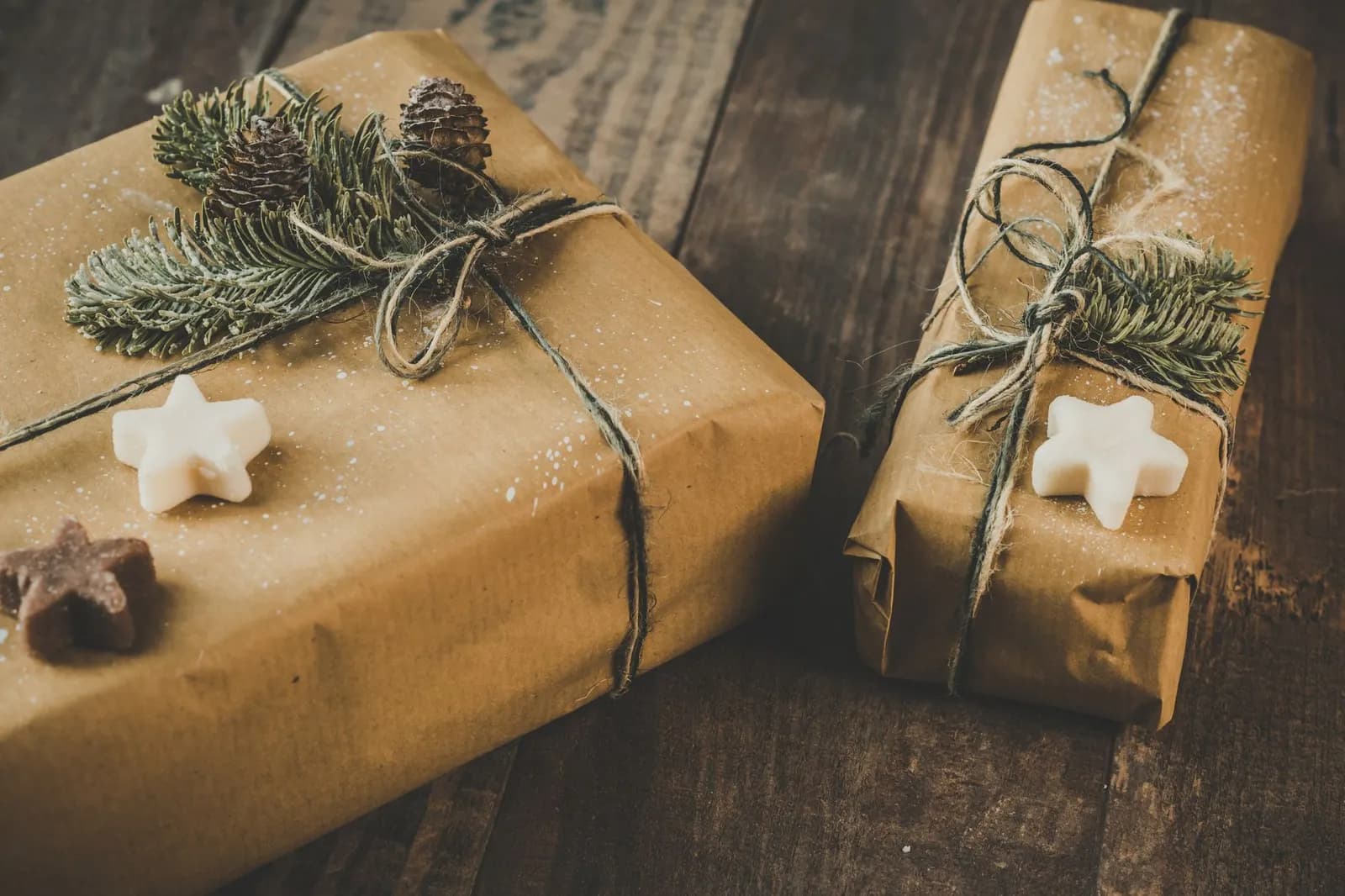
Wrap gifts in plain kraft paper tied with black, red and green yarn. For more low-cost gift ideas year-round, see our list of home decor gifts under $25.
Styling the Kwanzaa Table Setting
The symbols sit together on the mkeka as the Kwanzaa centerpiece, so let the kinara and symbols be the focal point of the room.
A clean layout for a standard dining table:
- Base: a black or neutral cloth, then the mkeka in the center.
- Center: the kinara on a tile or tray, in the middle of the mkeka.
- One side: the mazao basket.
- Other side: the muhindi, fanned out.
- Front: the kikombe cha umoja, with zawadi tucked at the edges or under the table.
- Extras: the day's principle card, and the bendera on the wall or a small easel.
Karamu (December 31) Feast Table Styling
The Karamu is traditionally held on December 31, the sixth day. It's a shared feast, so if you also mark New Year's Eve, an early-evening Karamu leaves room for both.
Budget styling ideas that suit a shared meal:
- Buffet style. Set a large mkeka at the center with the food placed so everyone can serve themselves. A long woven runner or a few fabric mkeka in a row on a table or the floor works.
- Potluck dishes. Ask each guest to bring one dish. That's Ujima and Ujamaa in action, and it cuts your cost.
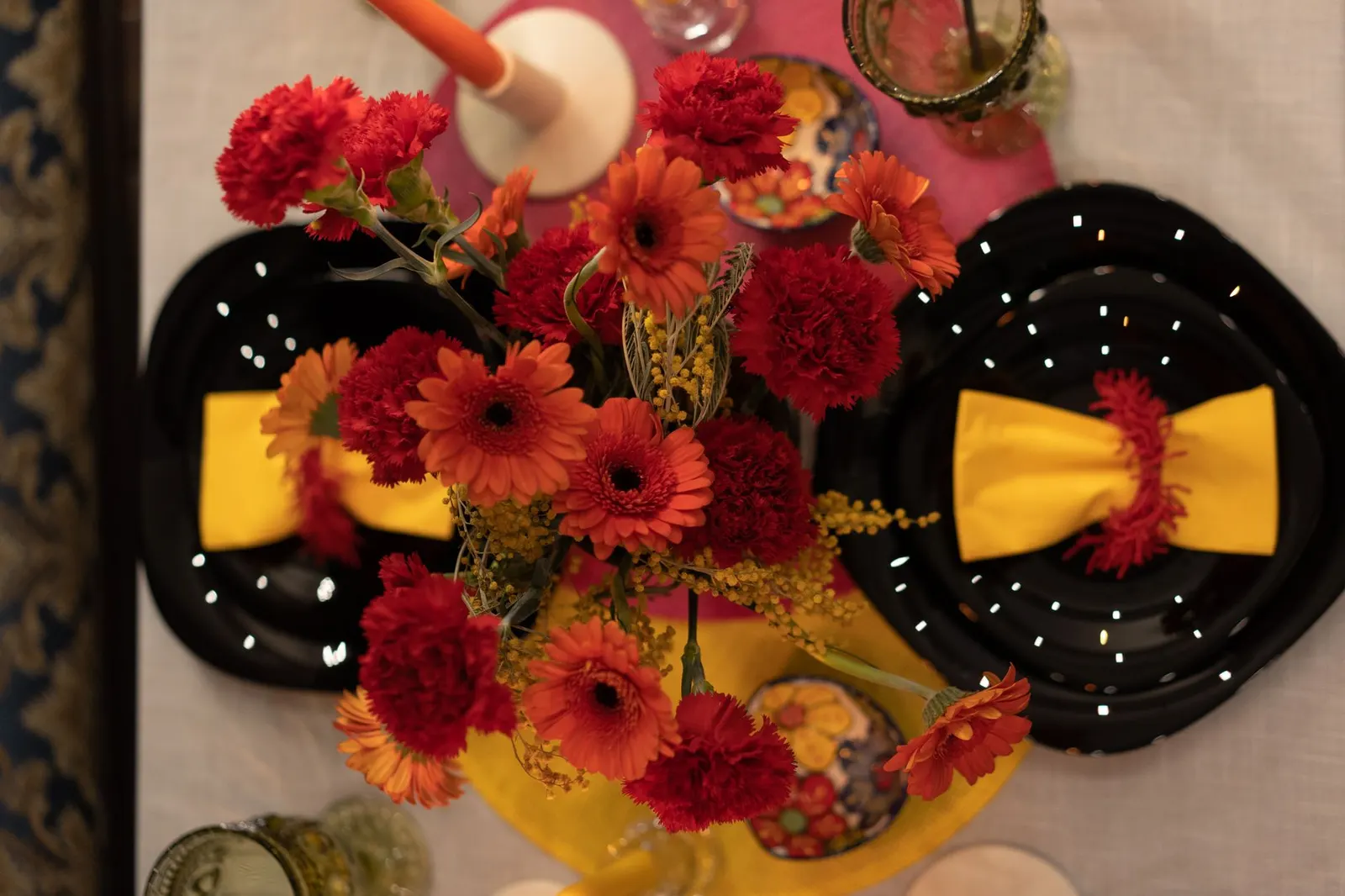
- Napkins in the three colors. Red and green paper napkins on black plates, or the reverse. Dollar Tree is the cheapest source.
- Program cards. A handwritten card listing the evening's welcome, remembrance and reflections.
- Room decor. Black, red and green cloth, flowers, prints and original art all suit the room. Paper streamers and family photos go up in an hour.
If you're also hosting a countdown that night, our New Year's Eve party at home on a budget guide covers the late-night part.
Your Kwanzaa Budget
Both plans are priced at Dollar Tree, Walmart, Home Depot, thrift stores and grocery stores. Prices are approximate as of October 2026.
Budget breakdown: The $25 table
$15.50–$43
| Item | Price range | Where to buy |
|---|---|---|
| Black, red and green construction paper or cardstock (for a woven mkeka) | $1.25–$5 | Dollar Tree, Walmart |
| Kwanzaa candle set (1 black, 3 red, 3 green tapers) | $8–$15 | Amazon, Walmart, local Black-owned shops |
| Scrap board or wood plank for a kinara (about 18 in) | $0–$6 | Home Depot, Lowe's, scrap bin |
| Woven basket or plain bowl for mazao | $1.25–$5 | Dollar Tree, thrift stores |
| Seasonal fruit and vegetables for mazao | $4–$8 | Grocery stores, Walmart |
| Thrifted goblet or cup for the kikombe cha umoja | $1–$4 | Thrift stores, Dollar Tree |
| Total | $15.50–$43 |
Prices are approximate as of October 2026 and vary by store and region. Prices are approximate shelf ranges for generic items as of October 2026. Dollar Tree: most items $1.25; multi-price items mostly $1.50–$7. Produce prices vary by region and season.
The $50 plan adds sturdier candle cups, a fabric base, corn and LED candles:
Budget breakdown: The $50 table (adds to the $25 table)
$19.50–$49
| Item | Price range | Where to buy |
|---|---|---|
| Metal taper candle cups (set of 7) for a sturdier kinara | $6–$12 | Michaels, Amazon, Hobby Lobby |
| Fabric remnant or thrifted cloth for the table base | $3–$10 | Walmart fabric aisle, thrift stores, Hobby Lobby |
| Decorative dried corn or fresh ears of corn (2–4) | $2–$6 | Grocery stores, farm stands, Walmart |
| Flameless LED taper candles (set) | $6–$15 | Walmart, Target, IKEA, Amazon |
| Kraft paper, twine and cardstock for handmade zawadi and cards | $2.50–$6 | Dollar Tree, Walmart |
| Total | $19.50–$49 |
Prices are approximate as of October 2026 and vary by store and region. Prices are approximate shelf ranges for generic items as of October 2026. Dollar Tree: most items $1.25; multi-price items mostly $1.50–$7. Produce prices vary by region and season.
DIY or Artisan-Made: Kinara, Mkeka and Candles
| Item | Save | Splurge |
|---|---|---|
| Kinara | DIY scrap-wood kinara with metal cups, $6–$18 | Hand-carved wood kinara from an artisan, $40–$120 (Etsy, local Black-owned shops) |
| Mkeka | Woven paper or thrifted straw placemat, $1.25–$5 | Handwoven straw or kente-inspired cloth mat, $20–$50 |
| Candles | Basic taper set, $8–$15 (Walmart, Amazon) | Hand-dipped beeswax candle set, $25–$45 |
| Unity cup | Thrifted goblet, $1–$4 | Carved wood or handmade ceramic cup, $20–$60 |
Renter-Friendly Notes
Keeping the Kwanzaa Table True to Its Meaning
- Mixing in other holiday decor. Keep the Kwanzaa table separate from Christmas decor, even in a small space. Our Christmas decor for small apartments guide has tips for giving each holiday its own corner.
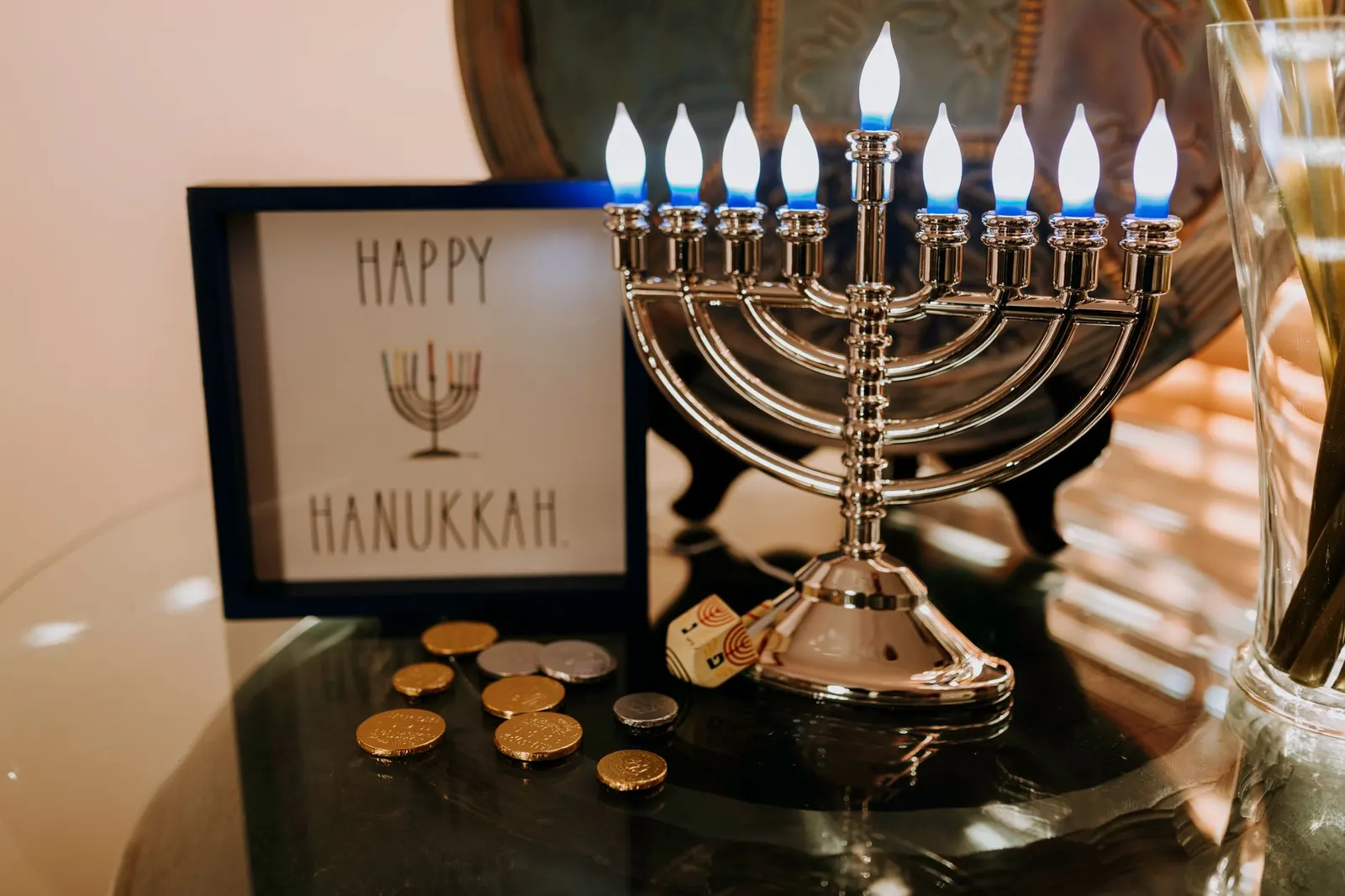
- Calling the kinara a menorah. The kinara holds seven candles; a Hanukkah menorah holds nine. If your home celebrates both, our DIY Hanukkah decor guide covers the menorah side.
- Putting paper next to the flame. Keep the mkeka edges, cards and husks 12 inches from candles, or use LED tapers.
- Buying instead of making. Store-bought sets are fine, but the handmade version is closer to the spirit of Kuumba, and it costs less.
After January 1
Eat the mazao, or cook the sweet potatoes. Store the kinara, unity cup and dried corn in a box with tissue paper. Flatten paper mkeka between two pieces of cardboard, and they'll be ready for your kids to remake or add to next year.
Frequently asked questions
What are the seven symbols of Kwanzaa?
The Official Kwanzaa Website lists seven basic symbols: mazao (the crops), mkeka (the mat), kinara (the candle holder), muhindi (the corn), kikombe cha umoja (the unity cup), mishumaa saba (the seven candles) and zawadi (the gifts). It also describes two supplemental symbols, including the bendera, the black, red and green flag.
What order do you light the Kwanzaa candles in?
The black candle, for Umoja, sits in the center and is lit first on December 26. The three red candles go on its left and the three green on its right. The Official Kwanzaa Website says the remaining candles are then lit from left to right on the following days. Practice varies among families, so follow your household's custom.
What do the Kwanzaa colors mean?
According to the Official Kwanzaa Website, black is for the people, red is for their struggle, and green is for the future and hope that come from their struggle. The candles, the flag and most Kwanzaa decor use these three colors.
What are good Kwanzaa gifts?
Zawadi are traditionally exchanged between parents and children. Guidance based on Dr. Karenga's model says gifts should be affordable and educational or artistic, and handmade gifts are encouraged because they reflect Kuumba, creativity. Books, handmade art and family keepsakes all fit. Many families give them on January 1, the last day; some exchange them at the Karamu on December 31.
Can you celebrate Kwanzaa and Christmas?
Yes. The Official Kwanzaa Website says Kwanzaa is a cultural holiday, not a religious one, and was not created to replace anyone's religion or religious holiday. Many families celebrate both. Kwanzaa starts December 26, the day after Christmas.
Sources (9)
- The Symbols, The Official Kwanzaa Website (Dr. Maulana Karenga) (accessed 2026-10-23)
- Candle Lighting (The Celebration), The Official Kwanzaa Website (Dr. Maulana Karenga) (accessed 2026-10-23)
- Roots and Branches, The Official Kwanzaa Website (Dr. Maulana Karenga) (accessed 2026-10-23)
- Frequently Asked Questions, The Official Kwanzaa Website (Dr. Maulana Karenga) (accessed 2026-10-23)
- Karenga-Kwanzaa (Kwanzaa celebration guide), University at Buffalo (hosted page) (accessed 2026-10-23)
- When Is Kwanzaa 2026? Dates, Meaning, and the Seven Principles, Farmers' Almanac (accessed 2026-10-23)
- What Is Kwanzaa?, Hallmark Ideas & Inspiration (accessed 2026-11-16)
- Candle Fire Safety, U.S. Fire Administration (FEMA) (2023-04-01)
- Safety with Candles, National Fire Protection Association (NFPA) (accessed 2026-10-23)
Image credits: Photo: RDNE Stock project · Pexels · Pexels License; Photo: Boris Hamer · Pexels · Pexels License; Photo: Mikhail Nilov · Pexels · Pexels License; Photo: Askar Abayev · Pexels · Pexels License; Photo: AmirHadi Manavi Moghadam · Pexels · Pexels License.