How to Buy a Realistic Artificial Tree on a Budget
Find the most realistic Christmas tree on a budget: PE vs. PVC tips, tip count, height and slim sizes, pre-lit trade-offs, and when prices drop.
- Budget
- Under $250
- Renter-safe
- Not applicable
- Difficulty
- Easy
- Time
- 1 hour to shop, 30–60 minutes to set up
This post may contain affiliate links; we may earn a small commission at no extra cost to you. Learn more.
In this post
Part of our guide: Seasonal Decorating on a Budget: A 12-Month Calendar
The most realistic Christmas tree on a budget is usually not the cheapest tree on the shelf, and it is not the $800 showpiece either. It's a mid-priced artificial tree with PE tips where you can see them, the right height for your ceiling, and a shape that fits your room. You can find one for roughly $100–$250 if you know what the box is telling you.
This is a buying guide, not a ranked list. We haven't put trees through hands-on testing, so instead of naming winners, this guide shows you how to read the specs and judge a tree yourself. It covers PE vs. PVC tips, tip count, height and width, pre-lit vs. unlit, branch styles, stands, storage, fire safety, where to shop and when prices typically drop.
Planning the whole season? Our seasonal decorating calendar maps out every holiday and sale window.
PE vs. PVC Tips: The Biggest Realism Factor
Needle material affects realism more than anything else. Here is the general difference, based on retailer explanations from Balsam Hill and Lights4fun. Treat it as general guidance, since every brand blends materials differently.
PVC (polyvinyl chloride)
- How it's made: flat sheets cut into fringe and twisted onto wire branches.
- Looks: fine from across the room, but flat and plastic up close.
- Cost: the cheapest option, and it fills out a tree well.
PE (polyethylene)
- How it's made: injection-molded into 3D needle shapes, often cast from real branches.
- Looks: much closer to a real fir or spruce, with rounded needles and texture.
- Cost: higher. All-PE trees are rarely budget buys.
Mixed PE/PVC: the budget sweet spot
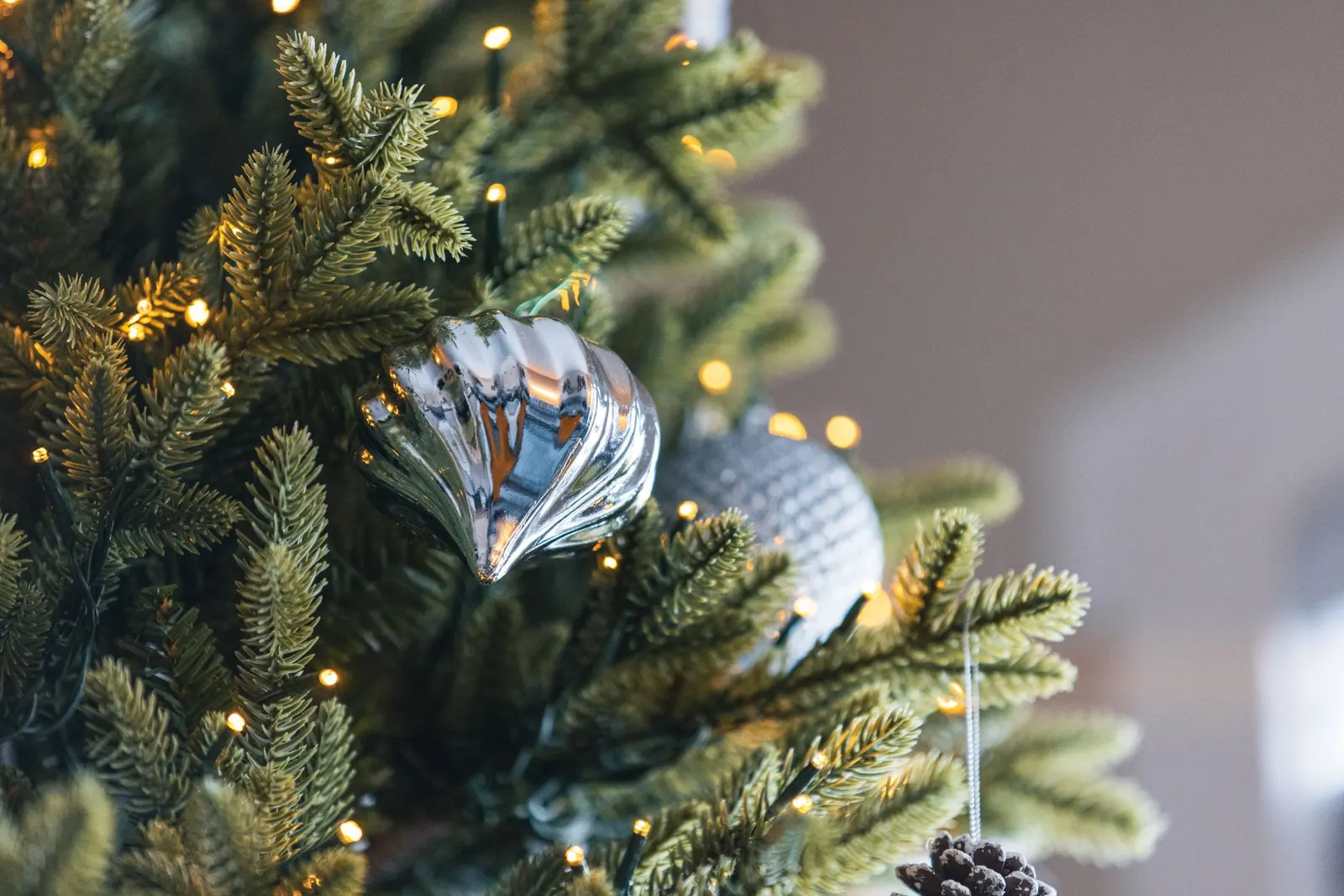
Many mid-range trees put PE on the outer tips (what you see) and PVC on the inner branches (what fills space). The more PE on the outside, the more realistic the tree looks.
How to read the box: look for wording like "1,200 tips (400 PE / 800 PVC)" or a percentage. If a listing only says "realistic tips" without numbers, check photos and reviews before buying.
How to Read Tip Count
Tip count is the number of branch tips on the tree. In general, more tips mean a fuller tree that hides the center pole and holds more ornaments.
But tip counts aren't standardized, so compare carefully:
- Compare trees of the same height and width. A 7.5 ft slim tree with 1,000 tips can look fuller than a 7.5 ft wide tree with 1,200.
- Check the PE share, not just the total. A tree with fewer tips that are mostly PE can look more realistic than a dense all-PVC tree.
- Look at photos of the unlit tree. Light can hide thin spots. An unlit photo shows the real density.
Height: Measure Your Ceiling First
Measure from floor to ceiling, then work backward.
- Leave room for the topper. Retailer guides suggest 6–12 inches between the top of the tree and the ceiling. Plan on about 12 inches if you use a star or angel, and about 6 inches with no topper.
- Check if the stand adds height. Some listings give height without the stand. If it isn't clear, check the product Q&A.
- Typical pairings: an 8 ft ceiling usually fits a 7–7.5 ft tree. A 9 ft ceiling can take 7.5–8 ft. Apartments with low ceilings or small rooms often suit 4–6 ft trees.
Width matters as much as height
The width on the box is measured at the widest point, usually the bottom branches. Measure your floor space, then subtract a few inches for fluffed branches and a walking path.
- Full trees: often wider than 4 ft at 7.5 ft tall.
- Slim trees: a middle ground for living rooms.
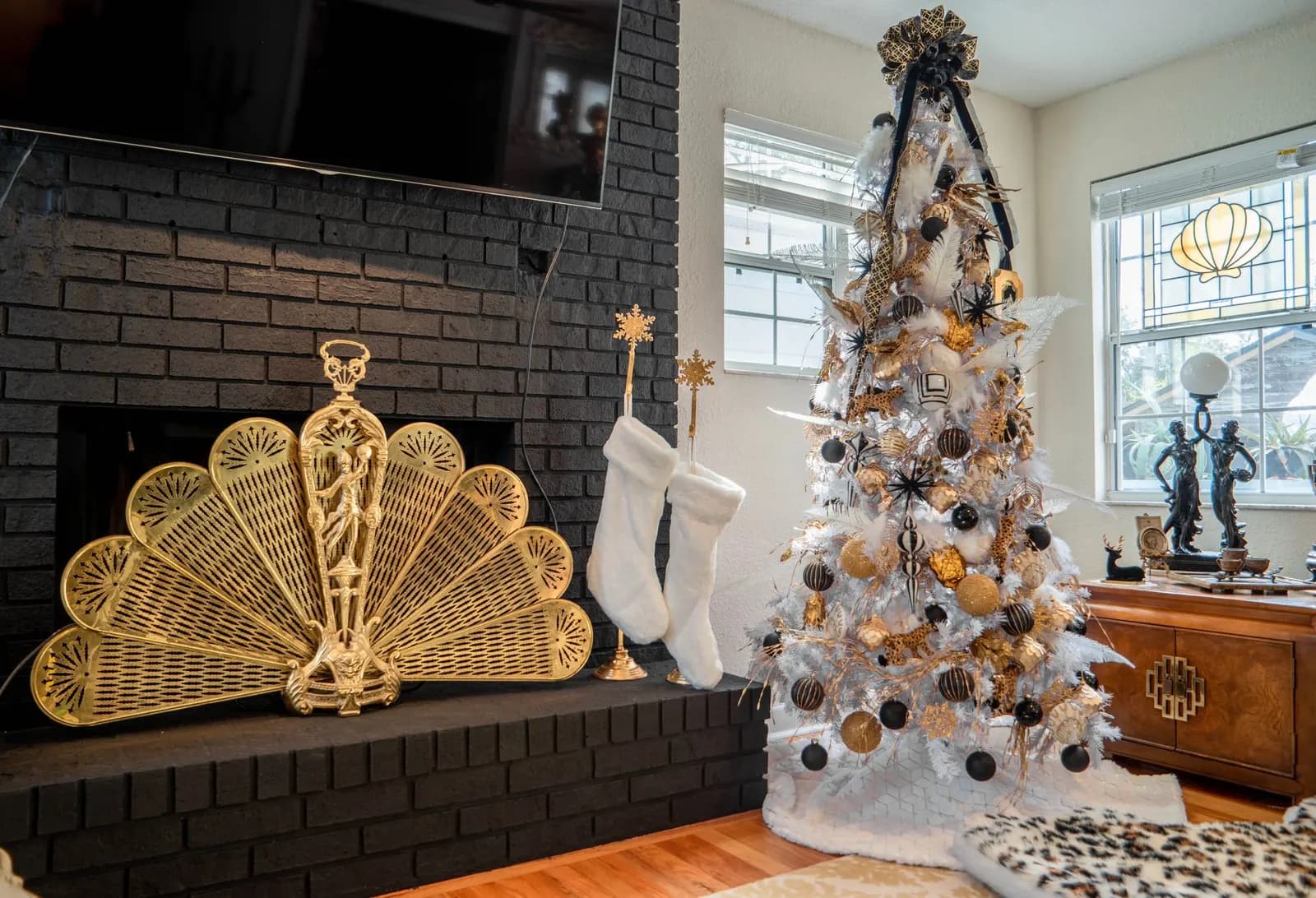
- Pencil trees: the narrowest shape, good for corners, entryways and studios.
For more ways to fit a tree into a tight floor plan, see our Christmas decor for small apartments guide.
Pre-Lit LED vs. Unlit
Pre-lit
- Pros: fast setup, lights are evenly spaced, and it often costs less than buying a tree and enough strands separately.
- Cons: if a section of bulbs fails, it can be hard to fix. Some trees use "keep lit" features that help, but none are guaranteed.
- LED vs. incandescent: LED holiday strands use about 70% less energy than incandescent strands, according to the U.S. Department of Energy. Warm white LEDs look closest to classic incandescent bulbs.
Unlit
- Pros: if lights fail, you just replace a strand. You choose your own color and brightness.
- Cons: more setup time every year, and lights cost extra.
A practical rule: if you hate stringing lights, buy pre-lit and check the warranty and return window. If you want the tree to last many seasons, unlit avoids the bulb-failure problem.
Hinged vs. Hook-On Branches
- Hinged branches stay attached to the pole and fold down into place. Setup is faster, and storage is simpler.
- Hook-on branches come off the pole and hook into slots one by one. These trees often cost less, but setup takes longer, and you may want to label branches by row.
On a budget, hinged is worth a few extra dollars if you set up the tree alone.
Stand Stability
A wobbly tree is a tipping hazard, especially with pets or kids.
- Look for a metal stand with wide-set legs.
- Avoid thin plastic stands on trees over 6 ft.
- Check the base diameter against the tree's width. A narrow stand under a wide tree is a red flag.
- Search reviews for "leaning" or "wobbly" before you buy. Those words flag a weak stand.
Storage Bags
Store your tree well and it should last for years.
- Duffel-style bags are cheaper and slide under a bed or into a closet.
- Upright rolling bags keep the tree assembled. They take more space but save setup time.
- Keep the original box only if it's still sturdy. Cardboard breaks down fast in damp basements or garages.
Fire Safety: Look for the "Fire Resistant" Label
The U.S. Consumer Product Safety Commission (CPSC) says to look for the label "Fire Resistant" when you buy an artificial tree. The CPSC notes that this label doesn't mean the tree won't catch fire. It means the tree is more resistant to catching fire.
Other safety basics:
- Keep the tree at least 3 ft from heat sources like fireplaces, radiators, space heaters, candles and heat vents, and don't block exits (USFA).
- Inspect lights every year and throw out strands with frayed or pinched wires (USFA).
- Use lights tested by a nationally recognized testing laboratory (CPSC).
- Never put electric lights on a metallic tree (CPSC).
- Turn the tree lights off when you go to bed or leave home (CPSC).
More than 1 in 5 Christmas tree fires involve a heat source too close to the tree, according to a USFA/NFPA infographic.
Where to Buy
Each retailer has a different strength:
- Walmart and Target: the widest range of budget PVC and mixed trees, plus storage bags.
- Home Depot and Lowe's: strong selection of 6.5–9 ft pre-lit trees, including slim shapes.
- Amazon: the biggest selection. Read listings closely for PE/PVC split and stand material.
- Costco: fewer choices, often larger pre-lit trees, with Costco's return policy.
- Michaels: frequent coupons and seasonal sales on trees and picks.
- IKEA: a few simple artificial trees and small tabletop options.
- Facebook Marketplace: used trees at a fraction of retail. Ask the seller to plug in a pre-lit tree and send a photo or video before you pick it up.
When Prices Drop
These are typical retail patterns, not promises:
- Black Friday through Cyber Monday (Black Friday is November 27, 2026). Major retailers often discount trees, sometimes starting early in November. Our Black Friday decor guide covers what's worth buying.
- After-Christmas clearance, late December into January. Prices are often lowest, but sizes and styles sell out.
- Mid-season (December), prices tend to be at their least flexible.
If you need a tree for this year, Black Friday is the best balance of price and selection. If you can wait, buy after Christmas for next year.
Product Types Worth Comparing
These are generic tree types with typical price ranges, not tested picks. Check specs, stand material and return policy before you buy.
6.5 ft slim pre-lit mixed PE/PVC tree
$100–$200 · Home Depot, Lowe's, Target
Look for PE outer tips and a metal stand. A good fit for apartments and corners.
7.5 ft full pre-lit LED mixed PE/PVC tree
$150–$350 · Home Depot, Costco, Amazon
Check total width; full trees can run over 4 ft wide at the base.
6–6.5 ft pre-lit PVC tree
$40–$130 · Walmart, Target, Amazon
The lowest-cost full-size option. Add picks or ribbon to hide flat PVC tips.
4 ft tabletop or pencil tree
$20–$60 · Walmart, Target, Michaels
Good for studios, dorms or a second tree.
Typical Price Ranges
Prices are approximate as of October 2026 and vary with brand and sales.
Budget breakdown: Typical price ranges by size and type
$315–$835
| Item | Price range | Where to buy |
|---|---|---|
| Tabletop tree, 2–4 ft (unlit or pre-lit) | $10–$60 | Walmart, Target, Michaels, Dollar Tree (mini sizes) |
| 6–6.5 ft PVC tree, pre-lit LED | $40–$130 | Walmart, Target, Home Depot, Lowe's, Amazon |
| 6.5–7.5 ft slim or pencil tree, mixed PE/PVC, pre-lit | $100–$250 | Home Depot, Lowe's, Target, Amazon |
| 7–7.5 ft full mixed PE/PVC tree, pre-lit LED | $150–$350 | Home Depot, Lowe's, Costco, Amazon |
| Tree storage bag (upright or duffel) | $15–$45 | Walmart, Target, Home Depot, Amazon |
| Used tree, any size(optional) | $10–$100 | Facebook Marketplace, thrift stores |
| Total (without optional) | $315–$835 |
Prices are approximate as of October 2026 and vary by store and region. Typical regular shelf-price ranges for generic tree types as of October 2026. Sale prices can be lower; premium brands run higher.
Splurge vs. Save
| Item | Save | Splurge |
|---|---|---|
| Needle material | All-PVC tree, $40–$130 (Walmart, Target) | Mixed PE/PVC with mostly PE tips, $150–$350 (Home Depot, Costco) |
| Lights | Unlit tree plus LED strands, $10–$30 for lights (Walmart, Dollar Tree) | Pre-lit LED tree with remote or color modes, adds $50–$150 |
| Shape | Slim tree, $100–$200 (Lowe's, Target) | Full 7.5 ft tree, $150–$350 (Home Depot, Costco) |
| Storage | Duffel tree bag, $15–$25 (Walmart) | Upright rolling bag, $30–$45 (Home Depot, Amazon) |
Common Mistakes
- Buying by height alone. A 7.5 ft full tree can be too wide for a small living room. Check the base width.
- Forgetting the topper. Leave 6–12 inches under the ceiling.
- Trusting "realistic" without numbers. Look for the PE tip count or percentage.
- Ignoring the stand. A thin plastic stand under a big tree is a tipping risk.
- Skipping the label. Look for "Fire Resistant" on the box or listing.
- Waiting until mid-December. Selection shrinks and prices are usually higher than on Black Friday.
Decorating It on a Budget
Once the tree is home, you don't need much to make it look full. Ribbon, a few dozen shatterproof ornaments and some faux picks go a long way. If you celebrate more than one holiday, see our DIY Hanukkah decor guide for budget ideas that work alongside a tree, or host friends early with our Friendsgiving decor for small apartments.
The Bottom Line
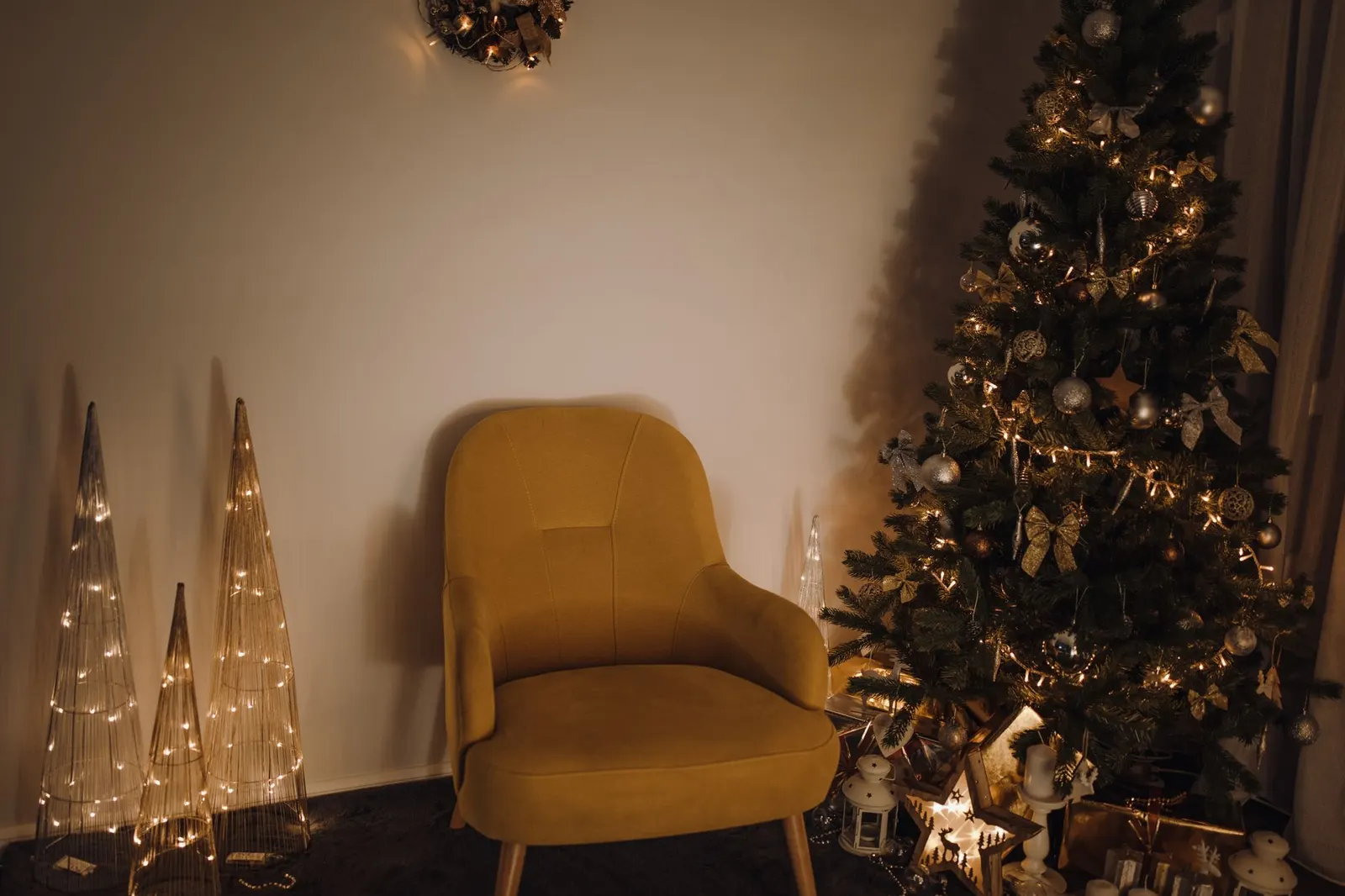
For a realistic tree on a budget, buy a mixed PE/PVC tree with PE on the outer tips, size it 6–12 inches below your ceiling, pick hinged branches and a metal stand, and look for a "Fire Resistant" label. Shop Black Friday for selection or after Christmas for the lowest prices.
Frequently asked questions
What is the most realistic type of artificial Christmas tree?
Trees with PE (polyethylene) tips usually look the most realistic, because PE needles are molded in 3D, often from real branches. PVC needles are flat strips. A mixed tree with PE tips on the outside and PVC filler inside is a common budget middle ground.
Is a PE or PVC Christmas tree better?
PE looks more lifelike, especially up close, but costs more. PVC is cheaper and fills a tree out well. On a budget, look for a mixed tree where the outer tips you actually see are PE and the hidden inner branches are PVC.
What size Christmas tree do I need for an 8-foot ceiling?
A 7 to 7.5 ft tree usually fits an 8 ft ceiling once you add the stand and a topper. Retailer guides suggest leaving 6–12 inches between the tree top and the ceiling, so measure your topper and stand height before you buy.
When are artificial Christmas trees the cheapest?
Prices typically drop during Black Friday and Cyber Monday sales (Black Friday is November 27, 2026) and again in after-Christmas clearance in late December and early January, when selection is smaller. Buying used on Facebook Marketplace is another low-cost option.
Are pre-lit artificial Christmas trees worth it?
Pre-lit trees save setup time and usually cost less than buying a tree plus enough lights separately. The trade-off is that a failed bulb section is harder to fix. LED strands use much less energy than incandescent ones, according to the U.S. Department of Energy.
Are artificial Christmas trees fire resistant?
Many are, but not all. The CPSC says to look for a "Fire Resistant" label when you buy one. That label does not mean the tree can't catch fire; it means it resists burning better. Still keep the tree 3 feet from heat sources.
Sources
- Put Safety at the Top of Your List When Decorating this Holiday Season, U.S. Consumer Product Safety Commission (2017-12-06)
- Holiday Decoration Safety Tips (CPSC-611), U.S. Consumer Product Safety Commission (accessed 2026-10-22)
- Holiday Fire Safety, U.S. Fire Administration (FEMA) (2026-10-07)
- Put a Freeze on Winter Holiday Fires (infographic), U.S. Fire Administration / NFPA (accessed 2026-10-22)
- The Difference Between a Realistic vs. Traditional Artificial Christmas Tree, Balsam Hill (accessed 2026-10-22)
- The Difference Between Artificial PE & PVC Christmas Trees, Lights4fun (accessed 2026-10-22)
- How to Choose the Right Artificial Christmas Tree Size for Your Home, Nearly Natural (2025-11-24)
- How Do Holiday Lights Work?, U.S. Department of Energy (accessed 2026-10-22)
- How to Choose the Right Christmas Tree Height, Balsam Hill (accessed 2026-10-22)

Save it for later
Pin the image or share the link with a friend who’s decorating on a budget.
Written by [Author Name]
[Short bio: replace with the real author's background in lib/site.ts]
How we work: prices are checked as ranges at major US retailers and dated; safety and climate facts link to their sources. Our editorial standards
Image credits: Photo: Doralin Tunas · Pexels · Pexels License; Photo: Joshua Wall · Pexels · Pexels License; Photo: Allie Reed · Pexels · Pexels License; Photo: Lum3n · Pexels · Pexels License. Openverse-licensed images are used under their stated licenses.